

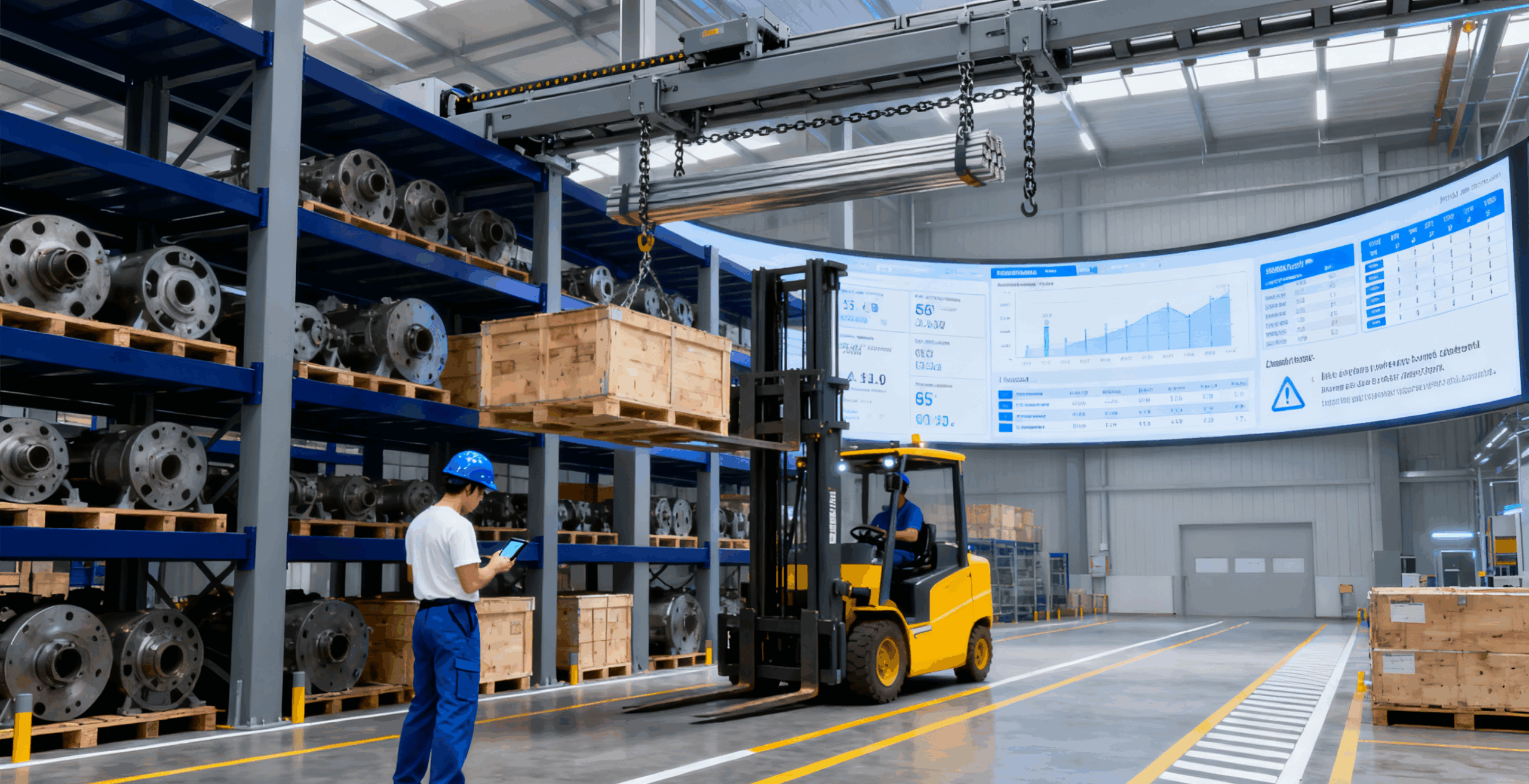
Warehouse in China Cost: Complete Guide for Importers and Exporters
Managing logistics goes beyond transportation—it starts with efficient storage. Many importers wonder what affects warehouse in China cost, and how to find a reliable partner who offers both affordability and accuracy. TJ China Freight provides professional storage and logistics integration through its advanced warehousing network that connects directly with sea freight, air freight, and rail freight routes, ensuring smooth transit for global shipments.
Why Is Warehousing So Important in International Freight?
A warehouse acts as the heart of your supply chain: where your shipment is received, sorted, labeled, and prepared for export or local distribution. Proper warehousing reduces shipping errors, consolidates multiple suppliers, and cuts overall logistics costs.

| Benefit | Explanation | Business Impact |
|---|---|---|
| Consolidation | Combine goods from multiple suppliers | Save on container space & freight cost |
| Inventory control | Real‑time stock monitoring | Reduces overstock risk |
| Packaging & labeling | Complies with import/export rules | Smooth customs clearance |
| Flexible distribution | Supports global markets | Faster fulfillment decisions |
| Insurance & safety | Secure storage environment | Mitigates loss and damage |
Types of Warehouses Available in China
Understanding the type determines how warehouse in China cost is calculated.
| Type | Description | Best For | Customs Status |
|---|---|---|---|
Normal Warehouse | Standard non‑bonded storage | Domestic logistics, export prep | No special permission |
Bonded Warehouse | For duty‑free storage under customs control | Pre‑export consolidation | Supervised by Customs |
E‑Commerce Fulfillment Center | Optimized for online sellers | Amazon FBA & Shopify sellers | Includes packaging & labeling |
Temperature ‑Controlled | Refrigerated or temperature ‑stable | Food, cosmetics, pharma | Licensed, higher rental |
| Transit Warehouse | Short‑term handling near ports/ airports | Freight waiting for dispatch | Temporary customs zone |
Bonded warehouses are generally 15–25 % more expensive than standard storage but save import duties during temporary storage before re‑export.
How Much Does Warehouse Storage Cost in China?
Actual cost depends on city, size, type, and additional services. Here’s an overview of typical warehouse in China cost ranges used across major logistics hubs (2024 market average):
| City / Type | Non‑Bonded — USD/m²/ month | Bonded — USD /m²/ month | Pallet Fee (USD/ pallet/ month) | Short ‑Term Storage ( USD/CBM/ day) |
|---|---|---|---|---|
Shenzhen / Guangzhou | 6 – 8 | 8 – 11 | 13 – 17 | 0.40 – 0.55 |
Shanghai / Ningbo | 6 – 9 | 9 – 12 | 14 – 18 | 0.45 – 0.60 |
Qingdao / Tianjin | 5 – 7 | 7 – 10 | 12 – 16 | 0.35 – 0.50 |
Inland Hubs (Chengdu , Chongqing) | 4 – 6 | 6 – 9 | 10 – 14 | 0.30 – 0.45 |
For short‑term export staging, customers typically pay per CBM per day; for long‑term stock keeping, monthly rent per m² or per pallet is used.
Additional Cost Components (and How to Manage Them)
| Service Type | Estimated Cost (USD) | Notes |
|---|---|---|
Loading / Unloading | $5 – 10 per CBM | Manual or forklift handling |
Palletizing / Re‑stacking | $8 – 12 per pallet | Optional consolidation |
Labeling & Barcoding | $0.10 – 0.15 per label | Amazon FBA requirements |
Export Packaging | $5 – 8 per carton | Secures cargo for transit |
Customs Supervision Fee | 1–2 % on declared value | For bonded warehouses |
| Insurance | 0.1 – 0.3 % per month of value | Varies by product risk |
Working with a comprehensive logistics provider like TJ China Freight, which integrates cargo insurance, customs support, and door to door delivery, ensures full visibility of these charges upfront.
Bonded vs Non‑Bonded Warehouse Advantages
| Criteria | Bonded Warehouse | Non‑Bonded Warehouse |
|---|---|---|
| Import Duty | Delayed until release | Pay immediately |
Regulatory Control | Supervised by Customs | Private operation |
| Ideal Use | Cross‑border or re‑export | Domestic distribution |
| Cost Level | Higher ( +15‑25 %) | Lower |
Common Cargo | E‑commerce , machinery , electronics | Local market goods |
Bonded space makes sense for global e‑commerce merchants or enterprises serving China TO Europe and China TO North America routes because cargo can wait without paying duties until exported.
Location Matters: Warehouse Costs Across China
China’s east‑coast logistics hubs command higher rental rates due to proximity to foreign trade ports, while inland regions such as Chongqing or Xi’an are cheaper but add domestic trucking.
| Area | Key Advantages | Cost Range | Suitability |
|---|---|---|---|
Pearl River Delta (Shenzhen , Guangzhou) | Close to HK ports and major airfreight routes | $$–$$$ | Best for export manufacturers |
Yangtze River Delta (Shanghai , Ningbo area) | Efficient intermodal transport | $$–$$$$ | Large retail exporters |
Bohai Bay (Qingdao , Tianjin) | Competitive pricing + northern access | $–$$$ | Machinery & steel exports |
Inland China (Chengdu , Wuhan) | Lower rents but higher domestic trucking cost | $–$$ | Factory consolidation hubs |
How Warehousing Integrates With Freight Services

Storage connects directly with transportation flow. For example, after manufacturing, goods move into TJ China Freight’s warehouse for labeling and cargo inspection. Then, they proceed to shipment via sea, air, or rail. Coordination reduces waiting times at terminals.
Typical flow:
- Goods received and inspected
- Labeling / palletizing
- Carrier booking (e.g., Maersk or Air China Cargo)
- Customs documentation by customs brokerage team
- Export dispatch
Such integration shortens lead times by 1–3 days per shipment compared to separate service providers.
Saving Strategies for Lower Warehouse Cost
- Use Consolidation –
Combine multiple orders into a single shipment to maximize CBM usage. - Set Clear Storage Duration – Avoid unnecessary long‑term rent; plan export dates.
- Automate Inventory – Digital tracking prevents loss and overstock.
- Outsource Fulfillment –
Rely on TJ China Freight for picking and packing to reduce headcount
costs. - Include Insurance Early – Bundling coverage lowers overall risk fees.
For exporters shipping to China TO Australia or the U.S., combining freight forwarding and storage under one contract saves 5–8 % in handling costs.
E‑Commerce Warehousing and Amazon FBA Prep Centers
As cross‑border e‑commerce expands, many businesses use third‑party FBA prep centers. A warehouse in China serving Amazon sellers typically includes inspection, barcoding, repackaging, and shipping via amazon fba channels.
| Service | Average Cost (USD) | Description |
|---|---|---|
Inspection + Prep | $0.30 – 0.50 per unit | Check defects & repack |
| Label Printing | $0.10 each | FNSKU barcodes |
Carton Reinforcement | 1 – 1 – 3 per carton | Meets Amazon standard |
FBA Palletization | 10 – 10 – 15 per pallet | Labeled for warehouse entry |
These centers reduce international return costs and ensure inventory complies with Amazon FBA import rules.
Warehousing and Supply‑Chain Risk Control

Storage isn’t just about space—it’s strategic risk management. Modern facilities feature fire‑suppression systems, 24‑hour security, and CCTV. Combined with professional handling regulations (ISO 9001, HACCP for food), storage aligns with global standards and customer audit requirements.
Flexible warehousing contracts help importers buffer against shipping
disruptions or port closures while keeping the supply chain fluid.
Technology and Future Trends in Chinese Warehousing
Automation, robotics, and IoT tracking are redefining cost structures. Smart warehouses can cut manual labor by 30 – 40 %, shorten loading times, and reduce damage claims. TJ China Freight continuously invests in digital platforms to give clients
instant inventory updates and QR‑coded delivery proof for each shipment.
Conclusion
Understanding warehouse in China cost helps businesses design smarter logistics budgets. Prices differ by city, space type, and service level—but when supported by transparent management covering warehousing, sea freight, air freight, and door‑to‑door solutions, importers get predictable expenses and a stronger supply chain.
TJ China Freight combines professional storage, insurance, and customs
support to help clients ship anywhere efficiently.
Ready to optimize your storage and shipping operations? Contact TJ China
Freight for a custom assessment of your logistics needs and see how
understanding the true warehouse in China cost can drive long‑term savings
and efficiency.
FAQs(click to expand and view )
It’s usually priced monthly per square meter or per pallet. For short‑term
exports, day‑rate billing per CBM is common. Rates vary by location and
whether the facility is bonded or non‑bonded. Additional fees may apply for
labor or special storage conditions.
Yes if you ship frequently outside China. Bonded warehouses delay tax
payments until goods are officially exported, which improves cash flow.
They also ease cross‑border trade when goods await consolidation for
Europe or North America.
Absolutely. Many FBA sellers use prep centers to inspect, package, and
label products before sending them abroad. This approach shortens
transit time and reduces rejection risk at Amazon warehouses.
Yes. Providers offer short‑term (30 days) and long‑term (up to 12 months)
options. Flexibility depends on volume commitment. TJ China Freight can
scale space usage seasonally to match production peaks.
Consolidate goods, use accurate inventory planning, negotiate volume
discounts, and integrate freight and storage under one logistics provider.
Bundled services save management time and cut duplicate fees on
handling and documentation.